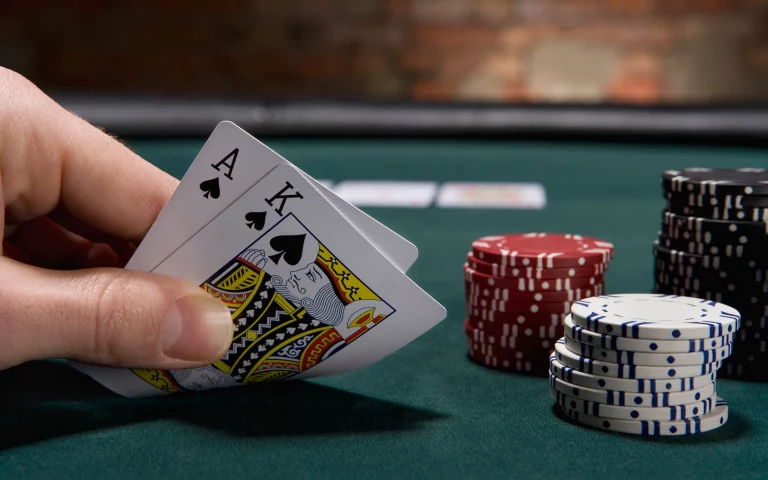
Two Big Stack Power Plays
In “Mastering The Big Stack” I discussed why most players rarely acquire big stacks and therefore don’t win tournaments and the challenges of playing the big stack: balancing aggression with self preservation. But I mainly focused on self preservation and the four times I’ve blown a big stack in the last year by overplaying my hand.
In this blog, I want to focus on the other aspect of playing the big stack – applying controlled aggression – by focusing on two power plays that you can easily incorporate into your game. I mentioned these plays in “Mastering The Big Stack” but didn’t go into detail.
The first play is to use light 3-bets against medium sized stacks. This forces them to fold or go All In. Since they usually don’t have an All In hand, they are forced to fold. Consider a play I made on Saturday in the Bay 101 Last $1000. A player raised to 24,000 from the cutoff at 12,000/24,000/24,000 with ~225,000 chips. I had a stack of at least 1 million chips and had A9off in the small blind. Obviously I didn’t want to get it All In with A9off but my suspicion was that her cutoff raise was somewhat light and her hand wasn’t strong enough to shove. In addition, I had already seen her make a late position raise with K7 suited so I knew there was a good chance she raising light. As a result, I 3-bet to 70,000, putting her to the test, and she folded allowing me to add a nice pot to my stack without any risk.
The second play is to bet the turn almost regardless of what you have against players with small or medium sized stacks. Most players who call preflop will float the flop but few with medium sized stacks will call a second bet on the turn with less than top pair.
Let me give you an example. Let’s say you raise from mid position with a big stack with A10off and a player with a medium stack (~30 big blinds) calls in later position. The flop comes down 986. You missed though you have a gutshot and two overs. Your opponent likely missed as well with two big cards. You c-bet but he will likely call with most of his range because he rightly doesn’t believe you. If the turn is another blank card – say a 3 – you can usually take down the pot by firing a normal sized turn bet of ~4,000.
There are two reasons for this. If your opponent in late position has two big cards, as he frequently does, it’s very difficult for him to call a second bet without a pair.
Second, as the size of the pot has now grown, he’s committing too many chips from his medium sized stack without a strong hand. For example, if he started the hand with 30,000 at 500/1000/1000 and called a preflop raise to 2,200 and flop bet to 2,400, the pot is now 11,700 and he has 25,400 remaining A 4,000 bet that would inflate the pot to 19,700 and decrease his stack to 21,400. The stack to pot ratio is approaching 1, potentially putting him at risk if you go All In on the river. With your big stack, you can afford to risk the 4,000 chips by betting with nothing but he can’t really afford to call.
If he calls, shut it down on the river because he most likely has a real hand – unless it’s a scare card you think you can use to bluff him off the best hand. In this way, you can frequently steal pots regardless of your hand simply because of the relative size of your stack compared to your opponents.