My Battle For Shooting Star Survival
Last Sunday I satellited into the $5300 WPT Bay 101 Shooting Star. It’s always super exciting to have the opportunity to play these marquee events. The two highlights of my poker career are satelliting into The WSOP Main Event in 2014 and winning my first WSOP circuit ring at Thunder Valley in October 2024.
Indeed, it was satelliting into the $5200 2024 Bay 101 Rising Star that was the catalyst for tremendous growth in my poker game. I had been struggling with some health issues but the excitement of playing The Rising Star energized me. I had a good stack heading into Day 2 but I lost a flip (JJ < AK) in the second level of the day.
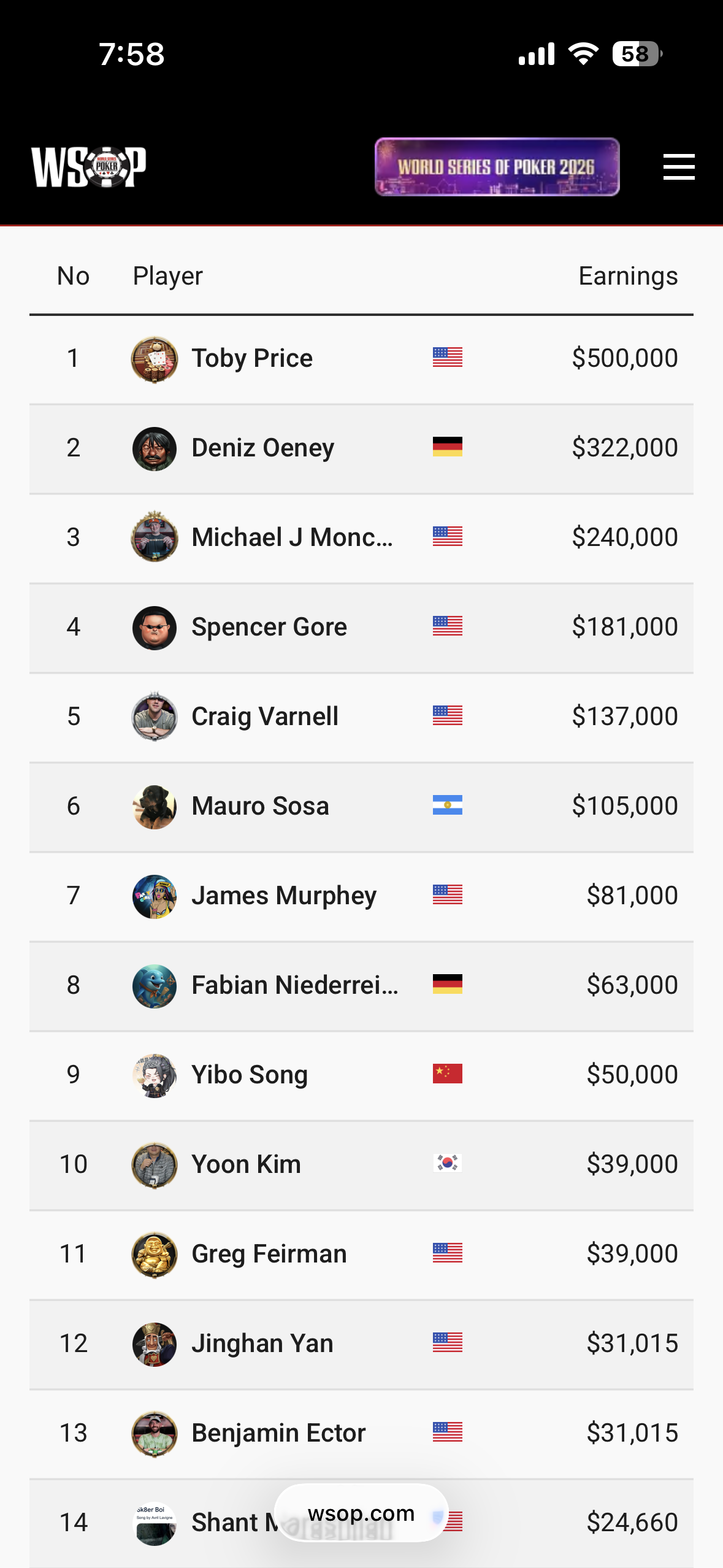
However, a month later in April 2024 I chopped the Bay 101 Last Saturday $1000. Then in October I won the WSOP Circuit Monster Stack at Thunder Valley for $31,000. In April 2025, I chopped the Bay 101 Last Saturday $1000 for the second time and in January 2026 for the third time for $29,000. This summer I flew to Vegas last minute to play in the WSOP. The only bullet I fired was in the $800 Summer Celebration where I took 11th out of 6,803 for $39,000.
My results have improved in the last few years because I worked on my game and got better. I started playing poker twenty years ago when Dan Harrington’s Harrington on Hold ‘Em was the bible of tournament poker. Centered around the concept of M – the number of orbits you can survive before being blinded off – Harrington’s was a survival based strategy.
But, as I explained in “From Harrington on Hold ‘Em To Chip Leader Coaching: The Evolution of Modern Poker”, poker has evolved since I first started playing. The most important change is the importance of preflop play. Back in the day, you only 3-bet premiums. When you did, your hand was essentially face up: JJ-AA and AK for the most part. It was mostly a flop game. Today, 3-betting light and even 4-betting light preflop is a big part of the game. While you still need elite post flop skills to navigate marquee events, I had to upgrade my preflop game in order to compete.
More broadly, Harrington’s survivalist strategy has been eclipsed by the big stack game. Early in a tournament, elite players try to build a big stack in order to bully the generally survival oriented short stacks when the blinds start to force them to fold or go All In (more on this later).
The framework I have adopted comes from Arnold Snyder’s The Poker Formula 2. In the second part of that book, Snyder outlines the five phases of a poker tournament: Chip Accumulation, The Minefield, The Bubble, The Money and The Final Table. I already explained the Chip Accumulation phase: contrary to Harrington’s advice, elite players use the early levels to aggressively build a big stack mostly by picking on the weaker players. This is abetted by the ability to rebuy.
The Chip Accumulation Phase gives way to The Minefield Phase around the time when the big blind equals 5% of the starting stack. For example, you start with 50,000 chips in The Shooting Star. So, at level 11, when the blinds increase to 1500/2500/2500, players who have not been able to significantly increase their stacks are now hovering around 20 big blinds. The players who have been able to accumulate a big stack before this stage are at a huge advantage. When they raise, the short stacks are generally forced to fold or go All In. When the short stacks raise, the big stacks can 3-bet, frequently light, again forcing them to fold or go All In.
So when I sat down at Day 1A of The Shooting Star Friday morning at 10am my goal was to build a big stack. Unfortunately it didn’t go the way I planned. I made hands but I was mostly second best. My stack was headed in the wrong direction.
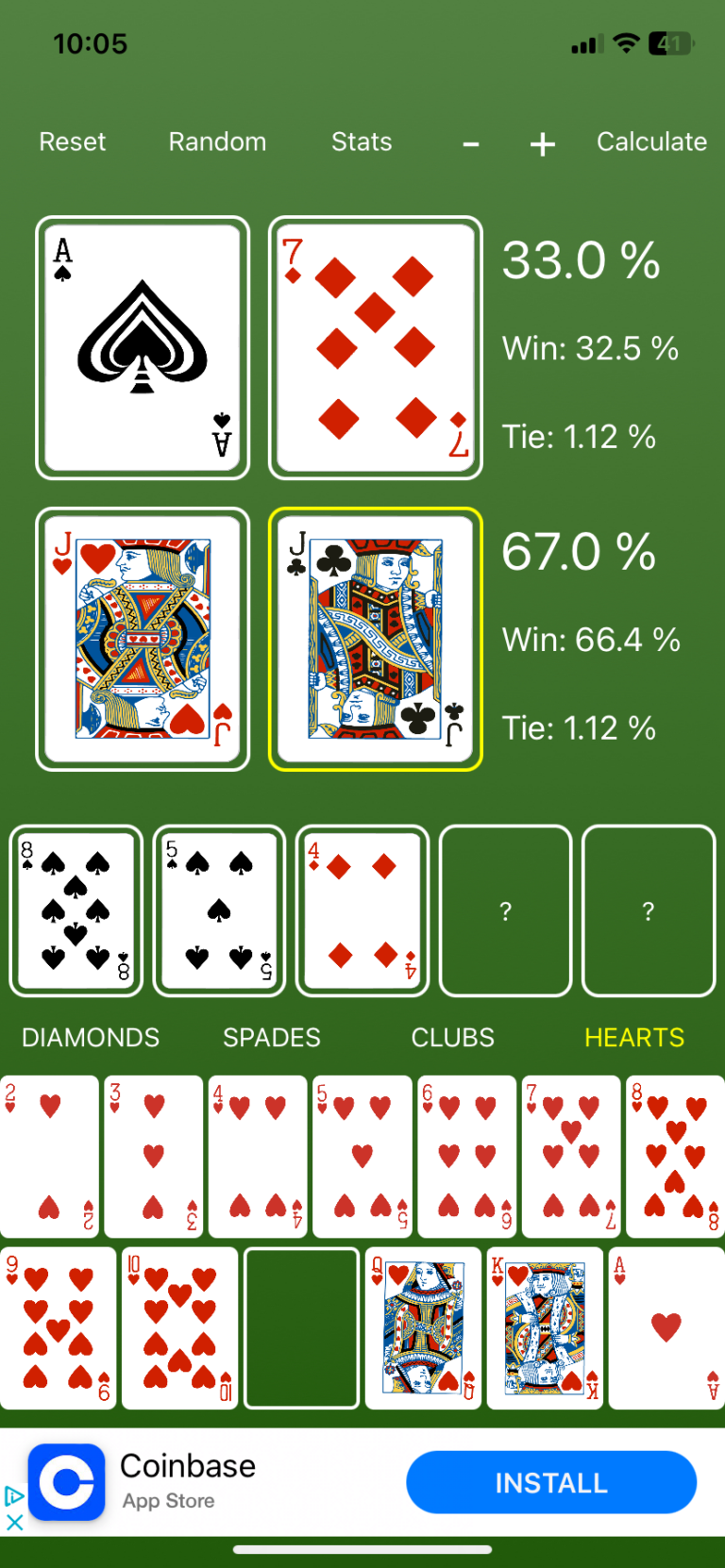
That’s when I picked up JJ in late position and made a standard raise. Both blinds called and the flop came down 765cxx. The blinds checked to me and I made a medium sized bet. John Warnock folded in the small blind while Donald Landwirth called in the big blind. The turn was the Jc. Bingo! Or so I thought. Landwirth checked to me and this time I made a ~75% pot size bet. Landwirth called. The river was the 3c and to my dismay Landwirth led out for ~60% pot. I tanked for as long as I ever have before making an agonizing fold. Landwirth later told me that he had 98 for a flopped straight. While I hated the river, it actually saved me. Had Landwirth raised the turn, I would have been out.
But now I was really short. At 300/600/600, UTG raised to 1500 and I shoved All In for 11,600 with 1010. UTG called with AK and my hand held up. Back in it!
A marquee event like The Shooting Star is different from smaller stakes tournament due to the size of the prize pool and the caliber of the players. The main way this plays out is an massively increased level of aggression in the form of raising and re-raising, especially preflop. I had already had to fold 33 and AQ off after calling an initial raiser only to be 3-bet.
That’s when I picked up AA UTG+1 after Mritunjay Jha had raised UTG. I decided to get tricky and just call hoping for another 3-bet that I could then 4-bet. Unfortunately two other players – John Wasnock and Josh Reichard in the big blind – just called.
The flop was K high and uncoordinated. Reichard and Jha checked and I made a medium bet. Wasnock called and the other two folded. The turn was a 9 and I made a ~67% pot size bet leaving only 9,000 chips behind, Wasnock called again. The river was a 10. It put a straight out there and also the possibility of K10 but I decided to go for full value and shoved All In. Wasnock called and mucked when I showed my Aces. Clearly he had just a King. Now I was above starting and in business!
That’s when things got a little crazy. 2015 WSOP Main Event Champion Joe McKeehen raised from UTG at 400/800/800, a player in mid position called and Josh Reichard 3-bet to 5,500. I looked down at JJ in the small blind. Given that Reichard was 3-betting a decent amount I felt that JJ was likely the best hand and I 4-bet to 13,500. Then McKeehen, who had me covered, shoved over the top of me for ~70 big blinds. It folded back around to me and, while I hemmed and hawed a bit, I knew pretty quick that I was gong to fold and it did. 13,500 was ~26% of my stack and while it was painful to fold, it was better than punting off the remaining 74%.
“It always works for The Grinder,” I said. John Wasnock, who finished second to The Grinder in the 2025 WSOP Main Event after having him All In with KK vs AK earlier at the final table, shot me a look. Of course, The Grinder 4-bet with JJ in the biggest hand of the 2025 WSOP Main Event Final Table when Kenny Hallaert raised with AK and got 3-bet. Both Hallaert and the 3-bettor folded. Mostly forgotten today is when he did something similar at the 2010 WSOP Main Event Final Table. Jason Senti raised with J10cc, James Dolan 3-bet with JJ and The Grinder 4-bet with AK. Once again, both players folded and The Grinder scooped the pot (you can watch the hand in this YouTube (Minutes 15:00-17:50)). Alas, I am not The Grinder and McKeehen surely had the goods in this instance.
My chip stack continued to dwindle when I was moved to a new table. Not too long after, UTG raised and I looked down at 99 in the small blind with ~14 big blinds. I shoved, the big blind folded and UTG called with AQ. I won another race and had a little breathing room once again.
That’s when the most important hand of the day arose and I made the best play of my entire poker career. A player in early position raised to 2,500 at 600/1200/1200, Ron Fetsch called, I called to his left, McKeehen called on the button and the small blind called as well. There were 14,300 chips in the middle and the flop came down 932hhx. The first three players checked to me and I bet 5,500. Mckeehen, the blind and the early raiser folded and Fetsch called. The pot was now 25,300, I had 26,400 and Fetsch had a much bigger stack.
The turn was the 9c and Fetsch led out for 15,000. As soon as he did so I remember thinking: “This is it. This is the decision that is going to define your day. Let’s get it right.” I took my time reasoning it out. If Fetsch had a 9 he likely would have bet the flop. In the event that he checked it, he would have checked it again and given me rope to hang myself given that he had nothing to worry about with trip 9s. Same for a set. The other hand that beat me – 88 – likely would have bet the flop and checked the turn as I could easily have a 9. In the event that he elected to check with 88 he would have checked again.
If he really had a big hand, I concluded, he would have checked. I boldly shoved All In with just 77. Fetsch had the dealer count out my chips. It was only 11,400 more but Fetsch, who clearly had very little, folded. Another player at the table asked me: “Do you have sevens?” “Yes I do,” I said, flipping my hand over. Everyone at the table was impressed by my read. One player said: “That’s a great read.” Like I said, it was the best play of my poker career and I am extremely proud of myself for taking my time, reasoning it out and trusting my read. I got the big decision right and for that reason I made it to Day 2.
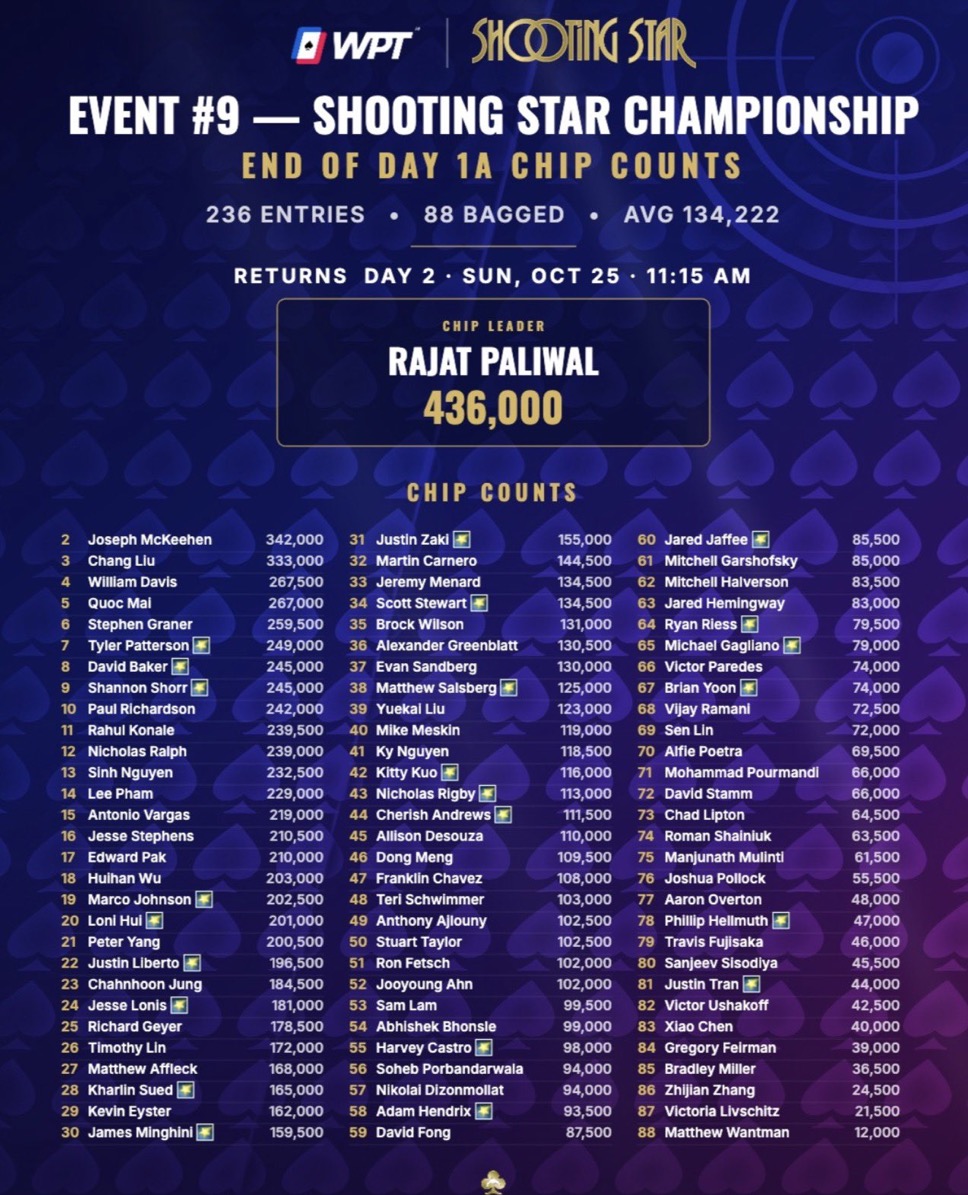
While I didn’t achieve my initial goal of accumulating a big stack during The Chip Accumulation Phase, I made excellent decisions in the many difficult situations I was put in. Instead of being out, I battled my way to Day 2 – though with only 39,000 chips heading to 1000/2000/2000 on Sunday at 11:15am. Of course, it’s better than being out. I still have a puncher’s chance.